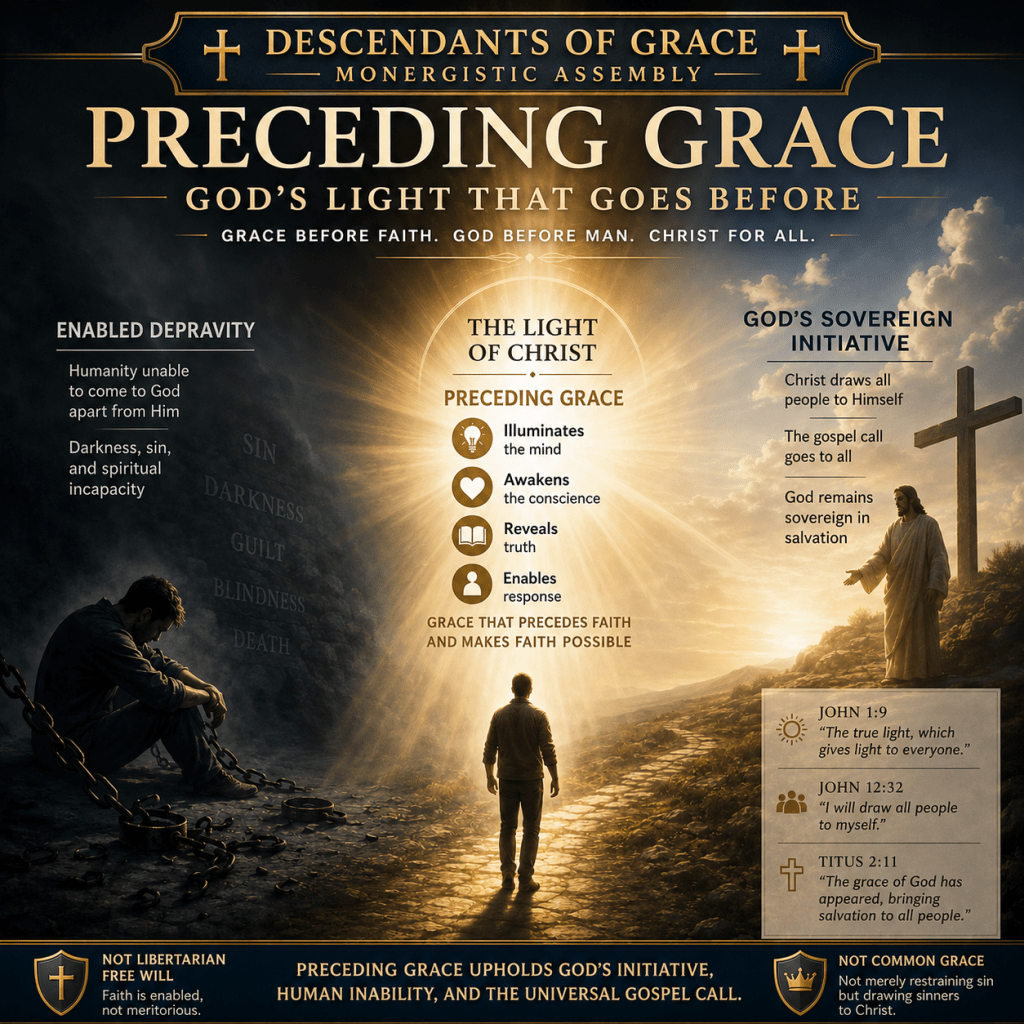
In CLARE Theology, no sinner comes to God independently. Fallen humanity never initiates salvation, creates faith from within, or approaches Christ by unaided will. Jesus declares, “No one can come to me unless the Father who sent me draws him” (John 6:44). God’s grace always comes first. CLARE calls this Preceding Grace. Before any sinner believes, seeks, repents, or responds, God acts. Through Christ, Preceding Grace confronts human depravity and enables the sinner to genuinely encounter the Gospel. The will is not autonomous or naturally free; it is an enabled will, entirely dependent upon prior divine grace. Yet Preceding Grace can be resisted. Scripture warns, “You always resist the Holy Spirit” (Acts 7:51). Those under this universal divine enabling may reject God’s gracious drawing. If they believe, they cannot boast, because grace preceded and enabled every response. The Eternal Elect, however, experience God’s effectual and irresistible drawing. Those given to Christ by the Father will come to Him (John 6:37). Their salvation is certain—not because they resist better, but because God effectually brings them to Christ. Thus, grace always comes first, resistance is real, and election remains sovereign.
In CLARE Theology, I prefer the term Preceding Grace rather than prevenient grace or common grace because it more clearly describes the unique work of God that comes before any human response while avoiding the theological assumptions often attached to those other terms.
Preceding Grace is the gracious work of God flowing from the atoning work of Christ, whereby God enables fallen humanity to genuinely hear, understand, and respond to the gospel. Because of Enabled Depravity, humanity remains unable to come to Christ apart from divine action. Therefore, salvation always begins with God, not man.
Unlike classical Wesleyan prevenient grace, Preceding Grace is not grounded in libertarian free will. It does not restore autonomous human freedom. Rather, it is a monergistic divine enablement that makes faith possible without making faith meritorious.
Unlike Calvinistic common grace, Preceding Grace is specifically redemptive in purpose. Common grace restrains sin and preserves society, but Preceding Grace actively draws sinners toward Christ through the proclamation of the gospel and the illuminating work of God.
Thus, Preceding Grace preserves God’s initiative, upholds human inability, avoids libertarianism, and explains how God sincerely calls all people to Christ while remaining fully sovereign in salvation.
In CLARE Theology, Preceding Grace is the gracious work of God that comes before any human initiative, desire, or movement toward Christ. Fallen humanity does not naturally seek God, understand spiritual truth rightly, or possess the ability to come to Christ apart from divine intervention (Romans 3:10–11; Ephesians 2:1–3). Therefore, every genuine opportunity to respond to the gospel begins with God acting first. Preceding Grace is called preceding because it precedes human thought, conviction, faith, repentance, and conversion. God enlightens, convicts, draws, and enables sinners through the work of Christ and the ministry of the Holy Spirit. Without this prior action, no one would seek the Lord at all. As Jesus declared, “No one can come to me unless the Father who sent me draws him” (John 6:44, ESV). Yet for the Preceding Elect, this grace is resistible. God genuinely enables a response without coercing it. Scripture repeatedly portrays people resisting God’s gracious call (Acts 7:51; Matthew 23:37). The gospel invitation is sincere, and those enabled by Preceding Grace may still reject Christ through unbelief. Thus, Preceding Grace preserves two biblical truths simultaneously: God always takes the first step in salvation, and humans remain responsible for how they respond to the gracious call placed before them.
In CLARE Theology, the Light of Christ is understood as God’s Preceding Grace—His gracious work that comes before conversion, before faith, and before any human response. This concept is rooted in passages such as John 1:9, which says that Christ is “the true light, which gives light to everyone.” The Light of Christ is neither saving regeneration itself nor natural human ability. Rather, it is Christ’s universal gracious influence upon fallen humanity. Because of the fall, mankind is incapable of coming to God apart from divine initiative. Yet through the work of Christ, God grants a measure of spiritual illumination to all people. This illumination exposes sin, awakens conscience, reveals truth, and enables sinners to recognize God’s call. It is grace that precedes faith. This understanding harmonizes with John 12:32, where Jesus declares that He will draw all people to Himself, and Titus 2:11, which states that the grace of God has appeared, bringing salvation to all people. In CLARE Theology, this universal drawing and enlightening ministry is called Preceding Grace. Thus, the Light of Christ is God’s gracious illumination shining into human darkness, overcoming the helplessness of Enabled Depravity and making every person genuinely accountable to respond to the gospel call. It is Christ’s light going before salvation, preparing the way for faith.
Enabled Depravity is the CLARE doctrine that describes humanity’s actual condition after the redemptive work of Christ is applied through God’s universal Preceding Grace. Humanity remains fallen, corrupted by sin, spiritually incapable of saving itself, and unable to produce saving faith apart from divine action. However, because of Christ’s atoning work and God’s gracious initiative, sinners are enabled to hear, understand, and respond to the gospel. Unlike the traditional Calvinist concept of Total Depravity, which emphasizes complete inability apart from special saving grace, Enabled Depravity teaches that God has already acted toward humanity through Christ, extending a universal enabling influence. This grace does not regenerate, justify, or save by itself, but it removes absolute inability and makes genuine gospel response possible. Enabled Depravity is not free will, autonomous choice, or human merit. Every movement toward God remains dependent upon divine grace. Without God’s preceding action, no sinner would seek Christ. Yet this grace may be resisted by some and embraced by others according to God’s sovereign purposes. Key passages supporting this doctrine include John 1:9, John 12:32, Titus 2:11, Romans 3:10–23, Ephesians 2:1–5, and Acts 17:27–28. Enabled Depravity preserves both humanity’s fallen condition and God’s universal initiative in Christ.


