Author: Yskander Arquimides Saucedo

  • An Understanding of the Trinity Doctrine

    An Understanding of the Trinity Doctrine

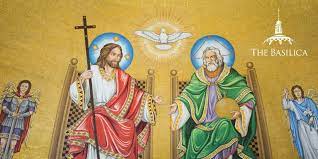
    The doctrine of the Trinity is an astounding doctrine. It is significant and stands apart from any other religious doctrines in existence. There are polytheistic religions such as; Buddhism, Confuscianism, and Hinduism, which teach multiple deities, but none come close to uniting them as one God. Some religions claim “Christian,” but they change the deity of Jesus Christ to justify the meaning or perceptions of the Godhead definition they prefer according to bias or deliberate misinterpretation. I will refer to the Trinity doctrine as we learn it this week through our study material as “Biblical Christianity.” The reason for choosing this title is to distinguish from other religions who claim the title of “Christian” but hold unbiblical views of the Trinity.

    Is it relevant to understand the complexity of the Trinity as outlined by biblical Christianity? Undoubtedly yes. For the person living in this world with a belief in a god or God, it is vital to understand who and what this God is and how God relates to us and us to God. Any distorted view of God’s person, attributes, character, and especially deity can have critical consequences for those who follow religious stipulations. The battle for preserving the soundness of the Trinity has been a war waging since its inception. We’ve read how at the Council of Nicea in 325 AD, Christians were battling the teachings of Arius, who propagated that “Christ and God were of different natures. Arius often referred to Jesus as angelic, and so preserved divinity for the Father alone” (Messick). Although the ruling was in favor of biblical Christianity, there are modern-day tenets of Arianism found in Jehovah’s Witnesses’ teachings. The Watchtower Society teaches that “Michael is another name for Jesus Christ, before and after his life on earth” (JW.ORG). In other words, Jehovah’s Witnesses believe Jesus Christ is not God as God the Son, but instead, Jesus is a created Angel.

    The Everystudent article explaining the physics of the Trinity is an exciting concept. The author indicates that “God, however, lives without the limitations of a three-dimensional universe.” A three-dimensional universe is simple for our minds to follow. We can comprehend first and second dimensional physics because our three-dimensional universe is superior to the first and second. But if you imagine a first-dimensional being trying to understand a second-dimensional world by reading alone, it is understandably perplexing. Imagine how much more difficult it is for a first-dimensional understanding of the third-dimensional world by reading alone. One of God’s attributes is “omnipotent,” meaning His power has no limits; therefore, it is reasonable to think that God has no limits to His transcendency. It is safe then to suggest that God is an indefinite-dimensional being, which helps us understand the Trinity’s transcendent existence. Imagine now the complexity of a third-dimensional being such as ourselves trying to understand the existence of an indefinite-dimensional God by reading alone. Dionysius the Areopagite was a philosopher and theologian converted to Christianity by the Apostle Paul. Concerning the Trinity, he wrote, “the human capacity to know the inner reality of the divine is so limited that it is impossible to say what the being of God is” (21).

    Nevertheless, God has been gracious enough to explain to our finite minds His existence and how to relate to His Godhead through His written word in a sufficient way. Perhaps our understanding of His triune being may never be perfect. But what God has provided is enough for those who seek His Wisdom.

    Works Cited

    Messick, Kurt. PHIL410 God and World. APUS. Lecture Notes.

    JW.ORG. Jehova’s Witnesses. Who is Michael the Archangel?https://www.jw.org/en/library/books/bible-teach/who-is-michael-the-archangel-jesus/. Web. 14 April 14, 2021.

    Everystudent.com. A Safe Place to Explore Questions About Life and God. Can You Explain theTrinity? https://www.everystudent.com/forum/trinity.html. Web. 14 April 2021.

    Collins, Paul M.. The Trinity : A Guide for the Perplexed, Bloomsbury Publishing Plc,2008. ProQuest Ebook Central,https://ebookcentral.proquest.com/lib/apus/detail.action?docID=601687. Web. 14 April 2021.

  • Do you think that God and Adam had a very close relationship, and do you think that curiosity played a factor in the deception of Eve?

    Thank you for the questions. They are good questions and worthy of a lengthy response, but I will keep it concise. I can only imagine a loving relationship between God and Adam. Consider scriptural illustrations of how the shepherd cares for the flock. Imagine how much more love there was from God to Adam. Consider now Genesis 3:10 after Adam disobeyed God and hides from Him. Adam said he was afraid of God after hearing his voice in the garden because he was naked. The first emotional state of shame and guilt as the first man sinned against God was a dreadful occasion in human history.

    Eve’s curiosity, I think curiosity was just one small factor in play in the larger scheme of the serpent’s deception. The deception against Eve, I believe, was a high misinterpretation of God’s commandment. It is crucial for anyone who believes the word of God to study it and know it. It is the safest way to guard one’s mind against any deception. Christians do not live by bread alone, but by the bread of life; without bread, the body dies. Without the bread of life, the soul parishes.

    The final question regarding Adam eating the fruit after his wife; it is clear from the scriptures that Eve was deceived, but Adam was not. 1 Timothy chapter 2:14 confirms Adam was not deceived; therefore, he deliberately disobeyed God. The love Adam had for his wife must have been immense. It is a reasonable common emotion for a man to lay his life down for his wife; this may have been the case for Adam. Interestingly, Ephesians 5:25 commands husbands to love their wives as much as Christ loved the church and gave his life for it. In allegory form, we see that Adam was a typology of Christ at that point in the garden as he was willing to lay his life down for or with his wife.

  • Do you think it’s possible Adam and Eve weren’t the only ones God created?

    Thank you for the question. I do not think God created any other humans besides Adam and Eve. In Genesis 4:14, Cain complains about his punishment and being a vagabond and worries about being killed by someone who finds him. Here many ask, well, who is there in the world to kill him if Cain and Abel were the first sons of Adam and Eve? Three verses later, Cain meets his wife, has children, constructs a city, and names it after his son Enoch. It takes human resources to construct a city, so obviously, there must have been people to assist in construction. In verse 25, Eve has another son, and they called his name Seth. In chapter 5:3, it reads Adam was 130 years old when he fathered Seth. Likely, Cain and Abel were not the first children of Adam and Eve. They likely had many children before Cain and Abel spread out and multiplied with children of their own. Also, in chapter 4:17, Lamech, the great great grandchild of Enoch the son of Cain, had two wives. It was common in those days for men to have multiple wives and many children. With all things considered, there were many children from Adam and Eve who had much offspring before Adam and Eve. The alternative explanation of other humans created around the world in addition to Cain and Abel presents several theological problems.

  • What makes the understanding of Genesis important to our understanding?

    Some claim that the book of Genesis is merely a historical piece of evidence. The claim is partially true, but in retrospect, the history in Genesis accounts not only the historical events of humans but also God’s historical events. The history in Genesis is significant from other historical narratives. It stipulates not only people’s actions but also God’s actions in Genesis. It guides the reader in understanding their relationship as a human in the world and with God. The book of Genesis is critical in understanding who and what God is, who and what humans are, the origin of God’s relationship with His creation, the ruin of man’s and God’s relationship as a consequence of the first disobedience of God’s commandment in the Garden of Eden, the corrupted disposition of human nature following their disobedience and eviction from the Garden of Eden, how people are to worship and conduct themselves before God; God’s redemption plan through ceremonial practice and worship as a shadow of the promised seed of Jesus Christ.

    From our study material, Bryan McAnally writes that “from the beginning of creation, God interacted with people and shared His plan with them . . . the first two humans disobeyed God. In doing so, they damaged their own good nature . . . they damaged their close friendship with God” (22). The first three chapters of Genesis are the most vital to man’s understanding. The first chapters specify God’s order of creation of all existence, including creating the first humans. It explains the reason for their creation, their standing in relationship with their creator, and their purpose in the world created for them. The first created humans present a genealogy of the human race before the flood. The flood becomes a pivoting moment in human history because Noah and his family are the only survivors of the flood and become the human race’s patriarchs. The genealogy then continues to the birth of Jesus Christ, fulfilling God’s decree announced in chapter three of the book of Genesis.

    Works Cited

    McAnally, Bryan. Indispensable Guide to Practically Everything: World Religions and What People Believe, Guideposts, 2009. ProQuest Ebook Central. Web. 07 April. 2021. https://ebookcentral.proquest.com/lib/apus/detail.action?docID=3118778.

  • Top Twenty-Five Readings of Military Philosophy Part 1

    1. Sun Tzu (also known as Sun Wu, first half of 5th century B.C.) Sun Tzu is undoubtedly one of the most influential military philosophers of ancient Asia (544 – 496 BC). [i] Scholars debate Sun Tzu’s life period between the Zhou Dynasty or the Warring States Period. [ii] Based on his title “Tzu,” he was considered a master in his craft and was the military advisor of King Helu. [iii] Sun Tzu’s military philosophy was an indirect approach to achieving victory. In contrast to a direct absolute war approach, Sun Tzu believed psychological warfare and economic pressure was the best strategy for a warrior to achieve victory in War. [iv]
    2. SunTzu’s Art of War Modern discoveries believe the Art of War was written during the Han Dynasty (206 BC – 220 AD). [v] The Art of War’s principle philosophy is to take advantage of indirect strategies in War instead of conventional means unless the conventional means are favored based on circumstances. Sun Tzu’s philosophy models modern-day unconventional or guerrilla warfare strategies. The principles of the Art of War were studied by Mao Zedong and other communist Chinese leaders. The English translation finally reached the western world in the early nineteenth century and is now required reading in military universities and war colleges worldwide. [vi]
    3. Kautilya (c.350-c.275 B.C.) Kautilya was the key advisor to the Indian King Chandragupta Maurya (c. 317-293 B.C.E.). [vii] Kautilya wrote his book Arthasastra with the intent of guiding a king on how to rule. Kautilya is most famous for his foreign policy known as the Mandala theory. [viii] The Mandala theory stipulates that the immediate neighboring country is an enemy, but the neighboring countries’ enemies are considered an ally.
    4. Arthasastra Arthasastra is considered one of the greatest political books written in the ancient world. Written long before the birth of Christ, its philosophy makes Machiavelli’s The Prince look harmless. [ix] Similar to Thomas Hobbes, Kautilya believed the goal of his political science was power. For Kautilya, the control of behavior and thoughts of subjects and enemies is a manifestation of power. [x] The Arthasastra was considered a lost source until its rediscovery in the early twentieth century. Since its rediscovery, Arthastastra’s English translations have become relevant to political realism and is comparable to Machiavelli’s The Prince. [xi]
    5. Miyamoto Musashi (1584 – 1645) Miyamoto Musashi was born to Samurai parents during the Warring States Period around 1584 in the Harima province of Honshu, Japan. [xii] His father trained Musashi at an early age in the art of Kenjitsu. Known for his reputation as an excellent swordsman, Musashi killed his first person by the sword at thirteen. [xiii] Musashi fought in different wars and various battles, eventually becoming a ronin with 60 dueling victories by age 29. [xiv] Eventually, Musashi abandoned metal swordplay for a wooden two-handed style he mastered and called “Two Heavens, One Style.” Musashi lived the rest of his days in a cave where he wrote his military philosophy, “The Book of Five Rings.” [xv]
    6. Bushido Bushido was a “complex Japanese warrior code that evolved throughout the medieval era in Japan and one that directed the moral and psychological development of the samurai warrior and their training in both martial arts and strategy.” [xvi]
    7. The Book of Five Rings The Book of Five Rings was written in 1645 as a practical guide on how a practitioner of swordsmanship should act in a particular situation. [xvii] The Book of Five Rings is not a military strategy of being a great commander like Arthashastra and The Art of War. Nevertheless, Musashi believed that the book’s mastery of cognitive techniques is applicable from individual combat to combat between massive armies. [xviii]
    8. Aeneas Tacticus (mid-4th century B.C.) Aeneas is the name of the author of the Paliorketika, given as an educated guess by historians. Historical editors of the Paliorketika added the name Tacticus to Aeneas to distinguish him from other Greek Aeneas and imply the author as a military tactician. [xix] It is not sure that General Aeneas is the actual author of the Paliorketika. [xx]
    9. Paliorketika Very little is written in the Paliorketika to confirm the assumed author of the writing. The Paliorketika explores “operational security and siege warfare, how to protect a threatened city from internal treachery, surprise assaults, prolonged sieges, how to perform offensive action outside of your city walls . . . how to garrison a city, set up watches, operate a gatehouse, smuggle or import arms, create signals and secret messages, institute martial law, as well as how to handle mercenaries in your employment.”[xxi]
    10. Renatus Flavius Vegetius (late 4th century) Very little is known about his life, but Vegetius is known as a high ranking Roman Soldier with extensive experience apparent to his book. [xxii] Vegetius states that the purpose of his book is to “collect and synthesize from ancient manuscripts and regulations the military customs and wisdom that made ancient Rome great.” [xxiii] He wrote his treatise “De Ri Militari” between 384 and 389 when Rome declined due to barbarization.
    11. The Military Institutions of the Romans Di Ri Militari was presented as a military manual concerning “strategy, tactics, logistics, and matters relating to command, control, communication, and intelligence.” [xxiv] De Ri Militari became one of the most influential military manuals of the historical West used by modern military commanders and theorists. [xxv]
    12. Emperor Maurice (582 – 602) Emperor Maurice reigned for two decades as a Roman Emperor (582 – 602). In 602, Maurice’s reign was cut short, overthrown, and killed. One of Maurice’s most significant accomplishments was the Byzantine Army’s restructuring and its reforms written in the Strategikon, one of the most important medieval period publications. [xxvi]
    13. The Strategikon The purpose of the Strategikon was to serve as a manual to train the mounted troops of the Byzantine army. Military analyst and government consultant Charles C. Peterson writes the Strategikon applies in today’s military organizations and its philosophies to Sun Tzu’s Art of War. [xxvii] The Strategikon consists of 12 chapters of instructions on how commanders can train and maneuver their Soldiers on the offensive with excellent efficacy.[xxviii]
    14. Niccolo Machiavelli (1469 – 1527) Niccolo Machiavelli was born in Florence on May 03, 1469. Both of his parents were of the old nobility of Florence. In his youth, he lived through the great power of Lorenzo De’ Medici. Machiavelli first entered public office when the Medici fell from power and Florence became a Republic, but he lost his office when the Medici returned to power. [xxix] Machiavelli’s experiences gave him a unique insight into the art of statecraft and War. He wrote two books, The Art of War and the Prince. Through his writings, Machiavelli’s legacy transcends into the modern-day, and those who make intentions to practice his philosophy are given the adjective of Machiavellian. In particular, the Art of War was a favorite of many of the greatest military philosophers, such as Napoleon Bonaparte and Carl von Clausewitz. [xxx]
    15. Machiavelli’s The Art of War and the Prince The Prince is a book written by Niccolo Machiavelli and dedicated to Lorenzo de Medici. Machiavelli expresses the purpose of the book is to express the attributes of a ruler and hopes his instructions may help the Prince see Italy to a successful resolve over its political distress. [xxxi] Written after The Prince was Machiavelli’s The Art of War. In fictional dialogue format between four men and a real mercenary who served the papacy, Fabrizio Colonna. In the Art of War, Machiavelli communicates his sentiments regarding the military’s nature as the foundation of his military philosophy. [xxxii]
    16. Sebastian le Prestre de Vauban (1633 – 1707) Sebastian le Prestre de Vauban was an engineer who developed a plan to build new fortresses along France’s frontiers and reinforce existing fortresses. Vauban plans successfully built 37 new fortresses and improved up to 300 fortresses before being promoted to Marshal of France and finally retiring in 1703. [xxxiii] Resulting from Vauban’s extensive military engineering talent, currently, twelve UNESCO World Heritage sites commemorate Sebastian le Prestre de Vauban’s legacy. [xxxiv]
    17. Maurice de Saxe (1696 – 1770) Maurice de Saxe was the son of Saxony and Polish King Augustus II. During the Spanish Succession war, he was enrolled as an officer in the Saxon Infantry at the age of 12. Maurice de Saxe had an extraordinary military career. King Loui, the XV, promoted him to Marshal General, which gave Maurice de Saxe command of all the French Armies; honor was given to only five others in French history besides Maurice de Saxon. [xxxv]
    18. Reveries on the Art of War Marshal de Saxe’s Reveries of the Art of War is a 32 chapter book written in 1732. Remarkably, he wrote his book during a thirteen-night span while being bedridden with a fever. [xxxvi] Marshal de Saxe had an enlightenment worldview that inclined him to believe that reason should guide War and all human endeavors. His reveries gave instructions of a wide variety of military tactics and troops’ training, which became standard operating procedures in all Europe. His fascination with military technology improved precision and manufacturing throughout the early half of the nineteenth century. [xxxvii]
    19. Frederick II the Great of Prussia (1740 – 86). Frederick became King in 1740 after succeeding Marshal de Saxon as Commander in the War of Polish Succession. He was an important influence on the Generalship of Napoleon Bonapart. Napoleon considered Frederick the II as a military and political mentor. [xxxviii] The Nazi Regime attempted to justify their actions and compare Hitler to Frederick because of the similar German territories’ expansion. Today, postwar Germany and most of the world recognizes Frederick the II as a military genius. [xxxix]
    20. The King of Prussia’s Military Instructions to His Generals In 1747, Frederick wrote his military treatise, “The King of Prussia’s Military Instructions to His Generals.” The title is a description of the content and context of the book. The advice in the book is in context with Prussia and how to best deal with its enemies. [xl]
    21. Carl von Clausewitz (1780 – 1831) Carl von Clausewitz was the son of a Prussian retired Army officer. He began his military training at the age of twelve as an officer cadet. [xli] In 1806 he suffered becoming a prisoner of war by the French Army. Clausewitz served with distinction between 1813 to 1814 as a liaison officer between the Prussian and Russian armies and rose to Brigadier General’s rank. After the Napoleonic Wars, Clausewitz served as President of the Prussian War College, where he wrote his seminal work, On War, until his death of Cholera in 1831. [xlii]
    22. Clausewitz’s On War Clausewitz’s On War focus’s on conventional warfare between states. The book was written between 1816 and 1830. It is an extensive volume of eight books and numerous chapters in each book. [xliii] Significantly, Clausewitz conveys the relationship between politics and war-making. The political detail made On War a substantial addition to military theory in the “Age of National Warfare.” [xliv] On War has been an immense influence on many governments and countries’ militaries. In the United States, the 1984 Weinberger Doctrine is modeled after the ideas of Carl von Clausewitz. [xlv]
    23. Alfred Thayer Mahan (1840 – 1914) Alfred Thayer Mahan served in the Union Navy as a naval officer during the Civil War. After many military endeavors and rising through the ranks, Mahan was appointed as an instructor at the Naval War College. He strongly advocated for the United States to establish a powerful navy to match its robust growing economy. [xlvi] The United States, Europe, and Japan welcomed Mahan’s ideas, and Mahan influenced their naval doctrines against the Russians. [xlvii] 
    24. The Influence of Sea Power Among History, 1660 – 1783 Mahan’s seminal work, “The Influence of Sea Power,” is a culmination of his ideas and lectures and precisely conveys his critical sea control and command of the sea concept. Command of the sea doctrine influenced the United States to restructure its battle fleet, making it possible for merchant ships to travel freely while pressing enemy ships to stay at a port or relative non-threatening distance. [xlviii] One of Mahan’s sea control’s core concepts is to pressure the enemy to battle offshore, preventing any assault from reaching U.S. lands. [xlix]
    25. Julian Corbett (1854 – 1922) Julian Corbett was the son of a land developer. He became a lawyer until 1882 when he switched careers to become a writer of historical novels. [l] He became the leading intellectual for the Royal Navy, writing naval history and strategy. He modeled his theories after Clausewitz but differentiated between land and naval warfare writing his seminal work “Some Principles of Maritime Strategy.” [li] Four of Corbett’s ideas continue to influence today’s militaries, including; “controlling lines of communication, understanding the political, economic, and financial dimensions of waging war, the partnership between civilian and military policymakers in devising appropriate strategies to protect the national interests, efficient strategies, and tactics designed to win wars while preserving costly assets.” [lii]

    [i] Brian Todd Carey, MILH304 “Before Organized Military Philosophy: War Celebrated in Poem,” accessed January 31, 2021.

    [ii] Brian Todd Carey, MILH304 “ Military Philosophy in Ancient China: Sun Tzu (Traditional Life Dates, 544 – 496),” accessed January 31, 2021.

    [iii]  Ibid.

    [iv] Ibid.

    [v] Brian Todd Carey, MILH304 “ Summery of Sun Tzu’s Art of War,” accessed January 31, 2021.

    [vi] Ibid.

    [vii] Roger Boesche, “Kautilya’s Arthasastra on War and Diplomacy in Ancient India.” The Journal of Military History 67, no. 1 (01, 2003): 9-38. Accessed January 31, 2021.

    [viii] Ibid.

    [ix] Ibid.

    [x] Ibid.

    [xi] Brian Todd Carey, MILH304 “Military Philosophy in Ancient India: Kautilya (350 – 275 BC),” accessed January 31, 2021.

    [xii] Bian Todd Carey, MILH304 “Military Philosophy in Medieval Japan: Myamoto Mushashi (1584 – 1685),” accessed January 31, 2021.

    [xiii] Ibid.

    [xiv] Ibid.

    [xv] Ibid.

    [xvi] Brian Todd Carey, MILH304 “Summary of Miyamoto Mushashi’s Book of Five Rings (written 1645),” accessed January 31, 2021.

    [xvii] Bian Todd Carey, MILH304 “Military Philosophy in Medieval Japan: Myamoto Mushashi (1584 – 1685),” accessed January 31, 2021.

    [xviii] Ibid.

    [xix] Kai Broderson, “Aeneus Tacticus” accessed January 31 2021.

    [xx] Ibid.

    [xxi] Brian Todd Carey, MILH304 “Classical Military Philosophy in Hellenic Greece: Aeneas Tacticus (fourth century BC), accessed January 31, 2021.

    [xxii] Renatus Vegetius Flavius, “Epitoma Rei Militari” In Encyclopedia of Warrior Peoples & Fighting Groups, edited by Paul K. Davis, and Allen Lee Hamilton. 3rd ed. Grey House Publishing, 2016. Accessed January 31, 2021.

    [xxiii] Ibid.

    [xxiv] Brian Todd Carey, MILH304 “Classical Military Philosophy in Late Imperial Rome: Flavius Vegetius Renatus (fourth century AD), accessed January 31 2021.

    [xxv] Brian Todd Carey, MILH304 “Summary of Vegetius’ De Re Militari (written 384-389 AD)” accessed January 31 2021.

    xxvi Brian Todd Carey, MILH304 “Medieval Military Philosophy in Byzantium: Emperor Maurice of Byzantium (582 – 602)” accessed January 31, 2021.

    xxvii Charles C. Petersen, “Maurice’s Strategikon Forces.” Hampton Roads Military History (Online) 2, (Winter, 2008): 2-7- Byzantine Lessons for Today’s Armed. Accessed January 31, 2021.

    [xxviii] Brian Todd Carey, MILH304 “Medieval Military Philosophy in Byzantium: Emperor Leo the VI of Byzantium (886 – 912), accessed January 31 2021.

    [xxix] Niccolo Machiavelli, Marriot, W.K.. “The Project Gutenburg ebook of the Prince” accessed January 31 2021

    [xxx] Brian Todd Carey, MILH304 “ Summary of Niccolo Machiavelli’s Art of War (1521) accessed January 31 2021.

    [xxxi] Brian Todd Carey, MILH304 “ Summary of Niccolo Machiavelli’s The Prince (1521) accessed February 03 2021.

    [xxxii] Brian Todd Carey, MILH304 “ Summary of Niccolo Machiavelli’s Art of War (1521) accessed February 03 2021.

    [xxxiii] Brian Todd Carey, MILH304 “ Military Philosophy in the “Age of Luis the XIV” Sebestian le Prestre, Maruis de Vauban (1633 – 1707) accessed February 03 2021.

    [xxxiv] Ibid.

    [xxxv] Brian Todd Carey, MILH304 “Military Philosophy in Enlightenmnet France: Herman Maurice de Saxe, Marsha de Saxe,” (1696 – 1750) accessed February 03 2021.

    [xxxvi] Brian Todd Carey, MILG304 “Summary of Marshal de Saxe’s Reveries of the Art of War (1757)” accessed February 3, 2021.

    [xxxvii] Ibid.

    [xxxviii] Brian Todd Carey, MILH304 “Summary of Frederick the II “the Greats” The King of Prussia Military Instructions to His Generals (1747)”  accessed February 3, 2021.

    [xxxix] Ibid.

    [xl] Ibid.

    [xli] Brian Todd Carey, MILH304 “Military Philosophy in the Wake of Napoleon: Carl von Clausewitz (1770 – 1831)” accessed February 3, 2021.

    [xlii] Ibid.

    [xliii] Brian Todd Carey, MILH304 “Summary of Clausewtiz’s On War (1832)” accessed February 3, 2021.

    [xliv] Ibid.

    [xlv] Ibid.

    [xlvi] Brian Todd Carey, MILH304 “The Origins of Modern Naval Theory: Alfred Thayer Mahan (1814 – 1914) accessed February 3, 2021.

    [xlvii] Ibid.

    [xlviii] Brian Todd Carey, MILH304 “Summary of Mahan’s The Influence of Sea Power on History (1890)” accessed February 3, 2021. 

    [xlix] Ibid.

    [l] Brian Todd Carey, MILH304 “The Origins of Modern Naval Theory: Julian Corbett (1854 – 1922)” accessed February 3, 2021.

    [li] Ibid.

    [lii] Ibid.

    Bibliography

    Boesche, Roger. “Kautilya’s Arthasastra on War and Diplomacy in Ancient India.” The Journal of Military History 67, no. 1 (01, 2003): 9-38. Accessed January 31, 2021.

    Broderson, Kai. “Aeneus Tacticus” accessed January 31 2021.

    Carey, Brian. MILH304 “Before Organized Military Philosophy: War Celebrated in Poem,” accessed January 31, 2021.

    Carey, Brian. MILH304 “ Military Philosophy in Ancient China: Sun Tzu (Traditional Life Dates, 544 – 496),” accessed January 31, 2021.

    Carey, Brian. MILH304 “Military Philosophy in Medieval Japan: Myamoto Mushashi (1584 – 1685),” accessed January 31, 2021.

    Carey, Brian. MILH304 “Summary of Miyamoto Mushashi’s Book of Five Rings (written 1645),” accessed January 31, 2021.

    Carey, Brian. MILH304 “Classical Military Philosophy in Hellenic Greece: Aeneas Tacticus (fourth century BC), accessed January 31, 2021

    Carey, Brian. MILH304 “Classical Military Philosophy in Late Imperial Rome: Flavius Vegetius Renatus (fourth century AD), accessed January 31 2021.

    Carey, Brian. MILH304 “Summary of Vegetius’ De Re Militari (written 384-389 AD)” accessed January 31 2021.

    Carey, Brian. MILH304 “Medieval Military Philosophy in Byzantium: Emperor Maurice of Byzantium (582 – 602)” accessed January 31, 2021.

    Carey, Brian. MILH304 “Medieval Military Philosophy in Byzantium: Emperor Leo the VI of Byzantium (886 – 912), accessed January 31 2021.

    Carey, Brian. MILH304 “ Summary of Niccolo Machiavelli’s Art of War (1521) accessed January 31 2021.

    Carey, Brian. MILH304 “ Summary of Niccolo Machiavelli’s The Prince (1521) accessed February 03

    Carey, BrianMILH304 “ Military Philosophy in the “Age of Luis the XIV” Sebestian le Prestre, Maruis de Vauban (1633 – 1707) accessed February 03 2021.

    Carey, Brian. MILH304 “Military Philosophy in Enlightenmnet France: Herman Maurice de Saxe, Marsha de Saxe,” (1696 – 1750) accessed February 03 2021.

    Carey, Brian. MILH304 “Summary of Marshal de Saxe’s Reveries of the Art of War (1757)” accessed February 3, 2021.

    Carey, Brian. MILH304 “Summary of Frederick the II “the Greats” The King of Prussia Military Instructions to His Generals (1747)”  accessed February 3, 2021.

    Carey, Brian. MILH304 “Military Philosophy in the Wake of Napoleon: Carl von Clausewitz (1770 – 1831)” accessed February 3, 2021.

    Carey, Brian. MILH304 “Summary of Clausewtiz’s On War (1832)” accessed February 3, 2021.

    Carey, Brian. MILH304 “The Origins of Modern Naval Theory: Alfred Thayer Mahan (1814 – 1914) accessed February 3, 2021.

    Carey, Brian. MILH304 “Summary of Mahan’s The Influence of Sea Power on History (1890)” accessed February 3, 2021

    Carey, Brian. MILH304 “The Origins of Modern Naval Theory: Julian Corbett (1854 – 1922)” accessed February 3, 2021.

    Flavius, Renatus Vegetius, “Epitoma Rei Militari” In Encyclopedia of Warrior Peoples & Fighting Groups, edited by Paul K. Davis, and Allen Lee Hamilton. 3rd ed. Grey House Publishing, 2016. Accessed January 31, 2021.

    Machiavelli, Niccolo. W.K. Marriot “The Project Gutenburg ebook of the Prince” accessed January 31 2021

    Petersen, Charles. “Maurice’s Strategikon Forces.” Hampton Roads Military History (Online) 2, (Winter, 2008): 2-7- Byzantine Lessons for Today’s Armed. Accessed January 31, 2021.

  • Does Power Corrupt Absolutely?

    I do not think it is power that necessarily corrupts a person merely because a person rises to a position of power. Instead, I believe humans are born with an innate sense of imperfect morality. We possess a consciousness of moral law, which sets us apart from animals, making humans significant. Christian theologians would use that proposition to suggest it as the qualifier of being created in the image of God. In any case, the state of corruption is innate. No matter what range of power one finds themselves in, corruption is there. It may seem that corruption is higher when in government positions, monarchies, politics, military, religion, etc. But in reality, since humans are corrupt, we find ourselves having to act unethically in particular circumstances regardless of power. For the sake of good and evil, humans have learned to manipulate unethical circumstances to survive. For example, consider our government leaders. If an adversary threatens our society and we must implement force that may inflict physical harm to many, but instead can achieve success without physical harm using deception, which would you choose to employ as a leader? Both choices are unethical. The point is, it is not power that corrupts absolutely; it is the high stakes in positions of power that inevitably force our will to implement corrupt behavior for both good and evil.

  • Political Ads Logical Fallacies

    I enjoy the expression of logical fallacies being the Achilles hill of critical thinking. It is interesting how sometimes the mind subtly conveys its ideas with illustrations of combat. The Achilles hill causes the mind to reflect on a historical warrior and the method of his defeat. Once the Achilles hill is crippled, the entire body collapses. Similarly, if logic is the strength of critical thinking, and I would add having a sound mind, then the building of logical reasoning is a virtue. It is a virtue that is necessary for peaceful and aggressive gains. If the intent for some is to manipulate others with logical fallacies, then those on the defensive position must build a fortress around their mind. That fortress consists of knowledge of the enemy’s arsenal and weapons of war against manipulation, considerably the logical fallacies.

    Below are a couple of modern 2020 political ads. To remain as objective as possible, I have chosen ads of both Trump and Biden.

    In the first video, at 17 seconds, the narrator claims Biden is on the side of working families because he is from Scranton, Pennsylvania. The fallacy there is stereotyping. It is not necessarily true that all members of Scranton, Pennsylvania, are hard-working blue-collar individuals. It does not necessarily follow that Biden will remain loyally thoughtful to hard-working laborers. At 57 seconds, Biden states the American idea is more powerful than any dictator or tyrant and flashes a picture of President Trump. There are three logical fallacies. The first is an appeal to force. It is a scare tactic against the American people to fear President Trump without providing any facts. Hasty conclusion or generalization is the second fallacy since there is a lack of evidence. Finally, the third logical fallacy is a smear tactic that unjustly represents his opponent’s position. Below is a video ad of President Trump.

    The beginning of the ad begins with the fallacy of poisoning the well. Biden eludes he would not be the oldest American President because Winston Churchill was older than him when he served as Prime Minister of England. The conflict is that Biden’s memory failed him thinking Winston Churchill was an American President. President Trump uses that video clip to attack and discredit his opponent for having the capacity to manage the country effectively. Besides smear tactics and as humorous as this video was, its entire conclusion is a non-sequitur. The evidence provided to support the conclusion that Biden was trying to reveal state secrets by eluding to “the thing” was weak and irrelevant. It makes more sense that Biden’s memory was failing him again as he was trying to quote “the thing” from our nation’s founding documents.

  • The Principles of Mission Command in Operation of Anaconda

    The Principles of Mission Command in Operation of Anaconda

                It is evident through the course of human events that war is an inherent endeavor revealed within our will to survive. Since this endeavor is inherent within all human will, it then seems agreeable, that so long as the human will exist then so will the probability of war. War then becomes manifested as a violent contest between human participants in the dynamic of operational environments motivated by ideological reasoning. For example, an idea forms in the mind and is stressed into action by the ambition of the human will and becomes motivated to assert its will over the will of another. Naturally, an individual or group disagrees with the ideology of the invasive force and now the prospect of war is introduced into the equation. Once a war is initiated it is plagued by violence, death, chaos, confusion, complexity, disorder, and uncertainty. Command and control of combat land operations become a critical role of the commander. The commander is faced with the responsibility to plan for the success of the mission with the information given regardless of how inadequate the intelligence seems. The idea is to plan sufficiently enough to reduce the chaos and uncertainty and destroy the enemies’ will to fight encouraged by the commander’s ability to organize mission command through its seven principles. The objective of this essay is to demonstrate how the seven principles of mission command can be applied to the operational environment of the Operation of Anaconda.   

                Behind every idea is a fundamental structure. The philosophy of mission command is supported by seven fundamental principles established in ADP 6-0 “competence, mutual trust, shared understanding, commander’s intent, mission orders, disciplined initiative, risk acceptance” (p. 19). Debatably, competence is the most essential principle relating directly to the commander. Competence is gained by knowledge and experience. Knowledge and experience are increased through self-development, training, education, classwork, and realistic simulations. Competence is critical not only for the commander but for the Soldiers subordinate to the commander. The competence of America’s military forces was tested in the battles of Operation Anaconda (OA). OA was a US attack on a stronghold in the Shah-I Kot area held by the Taliban and Al-Qaeda. Some are critical about the success of American and coalition forces but General Tommy Franks who led the attacks against the Taliban in 2001 and oversaw the invasion of Iraq in 2003 and defeat of Saddam Hussein stated that OA was “an unqualified and absolute success” (p. 346). A public declaration from such an esteemed figure commemorates the competence attributed to American forces. Agreeably, competence, and the principle of mutual trust correlate with each other.

                Mutual trust is shared confidence which must flow through the entire chain of command. Subordinates gain the trust of their commanders by displaying competence and commanders gain the trust of their subordinates by a display of their competence in training, garrison, or combat environments. Since the battle of Tora Bora in 2001, OA was the first large scale battle in Afghanistan. During OA, the Afghan alliance fighting side by side with American Soldiers became demoralized and eventually retreated. Americans remained in the battle trusting in each other’s will to fight, morale, confidence, and the warrior ethos among them. At the end of the first day of battle when the Troops returned to base for inspections; they realized that “all of them had been hit by multiple enemy bullets” (p. 15). It is circumstances like these that demonstrate and build the principle of mutual trust between warriors.  

                One of the difficulties a mission commander may encounter in a large scale operation such as OA is the principle of shared understanding. OA demonstrated collaboration between countries, government agencies, various special operation groups, different military components, and companies of large ground forces. Mutual trust between these groups should exist to share intelligence and information regarding the operational environment. For example, in the early planning stages of OA General Mikolashek, General Hagenbeck, and General Franks conflicted with the planning phase because the three shared information, but were each in charge of their generalship. Furthermore, they had no command over the Special Operation Forces (SOF). Such implementations would limit the flow of effectively shared information between components in battle. Finally, between several generals including SOF generals; the principle of shared understanding is exemplified as they agreed that command and control would be more effective under a conventional generalship under General Franks with SOF as a support element (Lambeth p. 167-168).

                The commander’s intent for OA was clear and concise. In the months before OA, the Taliban and Al Qaeda faced several defeats and withdrew to Shahikot. The intent was to eliminate the presence of the Taliban and Al Qaeda from Shahikot. Significantly, the commander’s intent should not be a repetition of why the mission is occurring, but a broader clear, and concise general purpose of the concept of the mission. Particularly, a mission never goes as planned and Troops are faced with hard decisions. The commander’s intent becomes the foundation that Soldiers should base their decisions on. Also, it may serve as an ethical NCO practice if orders are absent; the commander’s intent serves as a basis for taking initiative in the absence of orders.

                The commander’s intent is usually given with the principle of mission orders. Previously stated; the commander’s intent does not emphasize the why of the mission, but the mission order does. The mission order briefs the why, who, what, where, when of the mission, but not necessarily how. It is clear and direct but not to the point of impeding the decision of subordinates in battle, but not vague to where it results in confusion and indecisiveness.

                Facing decisive action is a common theme of military service and it leads into the next two and final principles of mission command; discipline initiative and risk acceptance. The initiative is disciplined because the decision made when engaged in an operational paradox is controlled within the parameters of the commander’s intent. There are countless examples available from various American battles but one, in particular, is notable in OA. It is the example demonstrated by Medal of Honor Recipient Master Chief Britt Slabinski. Slabinski’s primary mission was to take a SEAL team up a 10,000-foot snowy mountain and establish an observation post to report enemy movement. While attempting to land at the top of Taku Ghar, their helicopter was hit with an RPG. One of Slabinski’s SEAL teammates Petty Officer 1st Class Neil Roberts fell from the helicopter onto the top of the enemy-infested mountain. The helicopter crash-landed shortly after. At that moment, Slabinski decided to change the primary mission to a rescue mission after Petty Officer Roberts. He called in another helicopter and led the rest of his teammates back up the mountain where he was convinced in his mind he would not return home from this rescue attempt. After 14 hours of heavy machine-gun fire, thick snow, rough terrain, and calling in close air support, and caring for his wounded teammates they were finally extracted (Lange (2019).

                The risk acceptance principle is obvious in Slabinski’s circumstance. Danger, mental and physical injury and death is a risk in any military operation. Mission commanders are trained with methods to analyze risk factors to mitigate them. Regardless of mitigation, some risk remains and all from the highest commander to the Soldier in the operational environment understands and accepts the risk. In Sabinski’s mind, he was well aware of the risk of returning to the area of initial contact. In his mind, as the mission commander of his team, he calculated the risk against him and his team. He realized he would not return home to see his son. But the risk was worth the effort to save his teammate and complete his mission.

                Operation Anaconda is one of many battles one can study and learn from immeasurable contingencies and circumstances. Command and control have evolved into a well thought out structured philosophy now acknowledged as mission command. The seven principles of mission command are applicable in every combat scenario. From past wars to future wars, war has become an evolutionary power. Action is power and no greater force catapults action like the power of war. War cannot exist without the mind and will of man. The inherent will to survive and promote or impose ideas on the will of others will always carry with it the possibility of war. As the human will evolves, so will war and all the turmoil and change it brings. Nevertheless, sometimes war is a necessary evil to fight against an invasive evil or evil ideological will. And with that necessary evil comes a necessarily great mission commander. And because there is also inherent goodness within the will of human endeavor, so is the attempt to minimize death and casualties. From this concept, the philosophy of the seven principles of mission command has become discovered.

    References

    US Department of the Army. (2019). Mission Command: Command and Control of Army Forces

    ADP 6-0.

    Adamec, W. Ludwig. (2012). Historical Dictionary of Afghanistan. ProQuest Ebook Central.

    https://ebookcentral.proquest.com/lib/apus/reader.action?docID=817138#.

    Kuglar, Richard. (2007). Operation Anaconda in Afghanistan: A Case Study of Adaption in

    Battle. National Defense University, Center for Technology and National Security

    Policy. Print.

    Lambeth, Benjamin. (2005). Airpower Against Terror America’s Conduct of Enduring Freedom.

    ProQuest Ebook Central.

    Lang, Katie. (2019). US Department of Defense. Medal of Honor Monday: Navy Master Chief

    Britt Slabinski.

    https://www.defense.gov/Explore/Features/Story/Article/1736210/medal-of-honor-monday-navy-master-chief-britt-slabinski/.

  • Mechthild of Magdeburg

    Introduction

    Christian men dominated the medieval period with outstanding theological and philosophical writings. Women’s writings in theology and philosophy were scarce as it was not customary for women to teach and receive theological training. Regardless, nothing can prevent the ambition of the heart and mind from serving God through action, pen, and paper. Women like Mechthild of Magdeburg received mystical encounters with God similar to their male counterparts. These visions opened the door for women to inspire not only men but the entire world of whoever read their writings and teachings. In this short essay, I will expound on the life and works of Mechthild of Magdeburg.

    The Medieval Women

    In the circles of religion, women were considered weaker than men and susceptible to heresy. Men were considered the authority of biblical interpretation and guidance for all men and women. Women were discouraged from leading religious and teaching roles. It was not until the medieval time period when Christian philosophy and Christian mysticism flourished when women began to play a noticeable role in theological and philosophical writings and visions. With these noticeable writings and visions, the roles of women began to change the societal normal bias and prejudice of the age. For example; men began to ask women to pray for them because the prayers of women were considered more effective than the prayers of men (dickens). Mystics were held in high regard and the mystical visions from Christian women became a warrant for men to listen in a time when women were silenced. The mystic visions were considered a divine channel allowing women to break through church hierarchy. The intention of the woman mystics was not to disrupt the church but to bring reformation; although, they were oftentimes considered suspicious. In modernity, if someone seeks women practicing theology in history more than likely they will encounter women mystics.

    Woman medieval theological writings are not considered theological in the same sense as Saint Augustine or Saint Thomas Aquinas but are closer to the category of medieval literature. Women at this time were not considered deep logical or theological thinkers, and their writings may, in fact, reveal such a suggestion. Within the women’s mystic literature were a wide variety of spiritual works. In relation to visionary writings, the writings involve the person receiving divine revelations and prophecy from God or spiritual beings through graphic images or audible speech. There are several woman medieval mystics worth reading; one, in particular, was Mechthild of Magdeburg a member of the Dominican Order and author of her mystical book The Flowing Light of the Godhead.

    The Dominican Order

    The commitment to God from Mechthild (Matilda) is unquestionable. The action of becoming a Dominican Tertiary in the third-order speaks volumes regarding her love for God and service hood. Members of the Dominican Orders were followers of Saint Dominic who coincidental to the theme of woman mystics, Saint Dominic’s grandmother had a vision of Dominic having a bright star shimmering on his forehead on the day of his baptism (O’Conner). One of the principles of the Dominicans was to rid themselves of all wealth and live by faith under God in poverty. The purpose was to humble themselves away from any materialistic distractions in order to focus entirely on a committed life of study, preaching, loving and serving God. Chastity and poverty were believed to be a standard and necessary practice to exemplify the life of Christ. It is believed that Matilda was influenced by the preaching of the Dominican friars, that Matilda left her home for Magdeburg. She entered the settlement of Beguines where she began to serve at the age of 23 (Welch). She knew only one person in the town who was a friend of the family. Matilda made every intent to avoid this friend in the case her friend may try to discourage Matilda from her godly ambition as a Beguine. The Beguines existed as a semi-monastic community for women who wanted to live a religious life without having to completely give up their worldly interests. This meant that they could serve but leave the community if they later chose to start a family or pursue other worldly endeavors. As a Beguine, she was under the direct guidance of the Dominicans and lived a life of prayer and spiritual mortification. Life as a Beguine for Matilda did not come without its sorrows. In her youth, she had little to no encounters with false converts. As a Beguine she was exposed to the corrupt version of Christendom and was treated unfairly by the other ladies of Beguine; a fact made evident in her greatest writing “The Flowing Light of the Godhead.”

    Life and Works

    Moving to Magdeburg to serve must have been a fulfilling and easy decision. This is indicated by the fact that Matilda had to partly separate from her worldly desires and fair-style life until her later years when she became a nun at the convent of Hellfde. Matilda grew up under the influence of court life. Her speech was of a higher class and she was accustomed to the manners of noble ladies (Bevan). This was not the average status for someone who desires to become a part of any religious order. Her decision to stay in the Beguines for some time was wise until she felt she was truly called to sacrifice everything for the sake of Christ.

    Regarding her family and birthplace very little is known. Depending on conflicting sources she was born around the year 1207-1212 not far from Magdeburg. Biographical sources on her life are scarce if at all any exist. Most of the information about her life is gathered from Matilda’s own writings. It follows from her good upbringing that she received an as good education as her brother who was raised with good virtues and later became a Dominican friar. She received her first mystical encounter with the Holy Spirit at the age of 12 and began to record her visions after about the year 1250 (Madigan). According to Matilda her visitations from the Holy Spirit occurred daily. After becoming a Beguine at Magdeburg, “her heavenly inspirations and ecstatic visions became more frequent and were of such a nature that they dispelled from the mind of her confessor all doubt as to their Divine origin” (Ott). It was under the command of her confessor that she began to write down her visions.

    Matilda’s last years were spent in physical pain, but in spiritual peace at Helfde when she was accepted at the age of 53 in the year 1265. At the convent of Helfde was a nine-year-old girl who was directly influenced by Matilda for the next 12 years. The young girl would grow to become a proclaimed Saint by the Catholic Church “Saint Gurtrude the Great of Helfta.” During Matilda’s last years she fell ill and was peacefully cared for by her sisters at Helfde who regarded Matilda as their teacher. Resulting from prayer she decided to finally cease from writing and labor as she penned what she considered to become her final books. Later, now visually blind and unable to use her hands, she felt compelled to continue writing about her one true love, Jesus Christ. By way of verbal dictation, her final books full of wisdom and a life of spiritual knowledge was written with her last breaths for the glory of God.

    The Flowing Light of the Godhead

    The Flowing Light of the Godhead also known as The Flowing Light of Divinity consists of seven books written by Matilda during the years of 1250 – 1280. The book was forgotten by the fifteenth century but was revived by the nineteenth century. The book is a divinely inspired work of poetic literature. It is difficult to discern the measure of what is actual visions of Matilda and how much is inspired devotion and poetry. This is evident as she gives descriptions of heaven and hell, levels of torment and the types of people found therein to include Lucifer. In addition, there is peacefull practical daily advice, revelations of the love of God and divine insight and vision for the reader. It was said from Matilda, that those who wish to understand this book, should read it nine times.

    Conclusion

    The mind is a substance prohibited by none. The essence of the mind is a continual motion until the point of death. The motion of the mind is affected by thinking and no religion, race, or gender can stop it. In an age when women were discouraged from theological aspirations. The mind of women was given the means to channel divine inspiration to a religious hierarchy through mystical revelations from God. Mechthild of Magdeburg was a Christian woman given a gift by mystical encounters with God. In return, she gave the world through her writings and self-service labor divine inspiration for daily practical living in a dark world; an illuminating flowing light of divinity.


    Works Cited

    Dickens, Andrea Janelle. The Female Mystic : Great Women Thinkers of the Middle Ages. 2009.            http://web.b.ebscohost.com.ezproxy2.apus.edu/ehost/ebookviewer/ebook?sid=a65f7141- 1f44-490e-b07d-a4bcf6e89147%40sessionmgr102&vid=0&format=EB. Web. Dec 22, 2019.

    O’Connor, John Bonaventure. Saint Dominic and the Order of Preachers. Rosary Press, 1916. https://babel.hathitrust.org/cgi/pt?id=nnc1.cr60882891&view=1up&seq=93. Web. Dec 22, 2019.

    Welch, Alice Kemp. Of Six Mediaeval Women; to Which Is Added A Note on Mediaeval Gardens. N.P. 1913. https://www.biodiversitylibrary.org/item/66481#page/7/mode/1up. Web. Dec 22, 2019.

    Bevan, Frances A. Mechthild of Magdeburg. Matelda and the Cloister of Hellfde Extracts from  the Book of Matilda of Magdeburg. Project Gutenberg, 2011. http://www.gutenberg.org/files/35811/35811-h/35811-h.htm. Dec 22, 2019.

    Madigan, Shawn. Mystics, Visionaries and Prophets: A Historical Anthology of Women’s Spiritual Writings. Minneapolis: Fortress Press. 1998.  http://www.gjlts.com/Church%20History/Medieval%20History/Mechthild%20of%20Magdeburg.pdf. Web. Dec 22, 2019.

    Ott, Michael. Mechtild of Magdeburg. The Catholic Encyclopedia. Vol. 10. New York: Robert Appleton Company, 1911. 22 Dec. 2019 http://www.newadvent.org/cathen/10106a.htm. Web. Dec 22, 2019.

  • Boethius: Life of an Eternal Philosopher

    Thesis

    Medieval philosopher Boethius wrote one of the greatest philosophical books while awaiting his execution in prison. This essay will consist of three segments. The first segment will be exploratory of Boethius’s life and historical setting. The second segment will summarize his book The Consolation of Philosophy. The third segment will be an analytical approach to one of Boethius’s philosophical theories in his book, the concept of God’s foreknowledge. The intent is to give the reader a concise understanding and brief overview of Boethius’s life and philosophy.

    History and Context

    Boethius was born into an aristocratic family in Rome, the Anicii, which is indicated by his full name Anicias Manlius Severinus Boethius. The year of his birth was between 475 – 477 AD and the time period is in conjunction with the deposition of Roman Emperor Ramulus Augustulus in 476 AD. After the death of his father, he was adopted by a more prestigious family, the Symmachus. Boethius married the daughter of Symmachus in 495 AD and remained friends with Symmchus until the time of his death. Boethius considered himself a Roman and his native language was Latin. He was fluent in the Greek language as well and had access to the writings of Plato, Aristotle, and their commentators. He died in the 6th century and some consider him a classist philosopher; however, Boethius receives the attention and credit of medievalists because of his wide influence on medieval Latin culture.

    East Roman Emperor Zeno sent Theodoric, the King of the Ostrogoths to replace Odoacer King of the Barbarians in the West in 489. Four years later Theodoric killed Odoacer and seized control of Eastern Rome. The Ostrogoths were Arian Christians and did not interfere with the Catholic Christian religious beliefs. Theodoric positioned many Roman Citizens as senior officials; included in one of these offices was Boethius. This was a political and military strategy used to gain the trust of the Roman citizens in case Zeno should attempt to replace him similar to Odoacer. (Marenbon).

    By the year 510 AD, Boethius served as consul in the city of Rome. He spent most of his time writing and translating the works of Aristotle and other philosophical and theological treatises. In 1522 Boethius rose to become Master of Offices at Ravenna. This was a prominent position as he acted as the direct mediator between Theodoric and his court officials. Unfortunately, for Boethius, this was the pinnacle of heights from which began his downfall. While in the position of Master of Offices, an accusation was made by Cyprian against Senator, Albinus of “treasonable correspondence with those in Constantinople close to the Emporer Justin” (Marenbon). Boethius, as Master of Office; instead of judging or condemning Albinus, he defended the Senator and as consequence was accused of treason by Cyprian along with several other charges. Boethius pleaded his innocence, but the fabrication from Cyprian was well-knit, as he would be condemned by Theodoric if Cyprian was found guilty of false accusation. Boethius was sentenced by Theodoric to exile and execution somewhere between the years of 524 – 526. Boethius’s end was tragic in a sense but in another, the length of his incarceration was a gift to anyone who reads what is considered a philosophical masterpiece “The Consolation of Philosophy.”

    The Consolation of Philosophy

    The Consolation of Philosophy may be considered as the culmination of Boethius’s philosophical thought. An expression of original thought with gleanings of Plato, Aristotle, and St. Augustine. It is considered a prosimetric short work of literature written in the form of a dialog with an imaginary allegorical figure called Lady Philosophy. The book begins with Boethius musing over his sorrows with poetry. Suddenly Lady Philosophy appears to comfort him and making him realize the error of his ways as he has grown overly attached to the material objects of life. Although all material luxuries have been removed from him, he still has his mind and soul to comfort him. Good fortune visits every one to an extent but can just as easily be removed and Boethius is not the worst victim of the calamities of misfortune. All the external substances never belong to anyone but are merely borrowed in life. Late American Diplomat James Cromwell wrote that there are three moral principles that leed to Boethius’s despair which Lady Philosophy sought to correct or enlighten “1. He has forgotten his true nature 2. He knows not the end toward which the universe tends 3. He knows not the means by which the world is governed.” As Boethius begins to realize the inadequacy of happiness in material things; his reflections begin to ponder toward God and the conclusion that true happiness can be found only in God since only God attains perfect happiness. Lady Philosophy further comforts him as they dialog about subjects such as evil, God’s knowledge, fate, providence, and free will. Similar to St. Augustine, evil has no real substance. Augustine believed evil was like a mere shadow only revealed when the true substance of light from the sun is absent. Therefore evil is the absence of good action and evil does not exist substantially. God orders all things through providence and everything that happens on earth is considered fate. All fortune good or bad should be considered good because even bad fortune can instruct the recipient toward virtue. Free will exists, and although God knows everything from the past, present, and future, Boethius concludes that God does not interfere with the free will of humans.

    Foreknowledge

    The key principle in understanding Boethius’s concept of God’s foreknowledge is based on his definition of eternity. Boethius defines eternity as “the simultaneous and complete possession of infinite life.” If life is infinite, then it has no beginning. If life is infinite, then it has no end. Any life as it is commonly known today; that has no beginning and no end, is, therefore, infinite and does not exist in the limits of time. Time is limited because it is a subjective concept used as an instrument to measure the existence of life. In order for existence to be measured by time, a beginning and an end are necessary. It does not make sense to claim time exists without an end. It is true that a being can have a beginning without an end, such as the angels of God which he created. There is a point of reference known only to God who created them, but no reference to their destruction, therefore no point of reference for an end measurement. This type of existence with a beginning and no end can be eternal but does not follow the definition of Boethius’s “infinite” concept. An infinite being would be God who does not have a beginning and an end. Since God has no beginning and no end, He has no point from which to measure any existence of life which would necessitate the concept of time as a conceptual measuring instrument; therefore God exists outside of time. The past, present, and future are all-time references and do not apply to Boethius’s “simultaneous infinite life” concept. This means God’s knowledge is something that he knows in the future, present, and past. Boethius believes God knows all things simultaneously. Every thought and plan already existed in eternity. The concept of “idea” is non-existent in the foreknowledge of God because there is no point of reference in “time” when God thought of an idea because that would imply learning. Infinite knowledge cannot learn anything because simultaneous infinite knowledge eternally has and will always know all.

    Conclusion

    The misfortune of Boethius is not an uncommon occurrence in this world. It is not difficult to find many people in history who were unjustly imprisoned or sentenced to death. Significant to Boethius is what he decided to do with his time while in prison. Born into an aristocratic family and achieving success in his career in politics; he had need of nothing until suddenly fate removed everything including his life. Understandably, the condition he was in would push the average person to a mental state of hopelessness. Yet Boethius proved to have an unaverage mind. Absent from all his material luxuries and pleasures; he found comfort in the one thing no power could force away, his will to think. By thinking he philosophized his way to comfort and hope as he awaited his execution. He wrote one of the world’s greatest philosophical masterpieces which highly influences the world to this day. Some consider him a classical philosopher, some medieval. But when a philosopher writes a book such as The Consolation of Philosophy and impacts the world from its beginning to this present day; then there is no end in sight. His influence has broken the barriers of time along with the greatest philosophers of antiquity. Since there is no end in sight to his influence, Boethius is not a classical or medieval philosopher, he is an eternal philosopher.


    Works Cited

    Marenbon, John. Boethius. New York. Oxford University Press, 2003. https://ebookcentral.proquest.com/lib/apus/reader.action?docID=3052086&ppg=20. Web. Nov 24, 2019

    Boethius, and James, H. R. The Consolation of Philosophy of Boethius. London: E. Stock, 1897. https://search-proquest-com.ezproxy1.apus.edu/psycbooks/docview/863531963/A8F8328813C14A7FPQ/1?accountid=8289. Web. Nov 24, 2019.

    Boethius, Anicias. Cooper, W.V. The Consolation of Philosophy. http://www.exclassics.com.

    1. Web. Nov 24, 2019.